

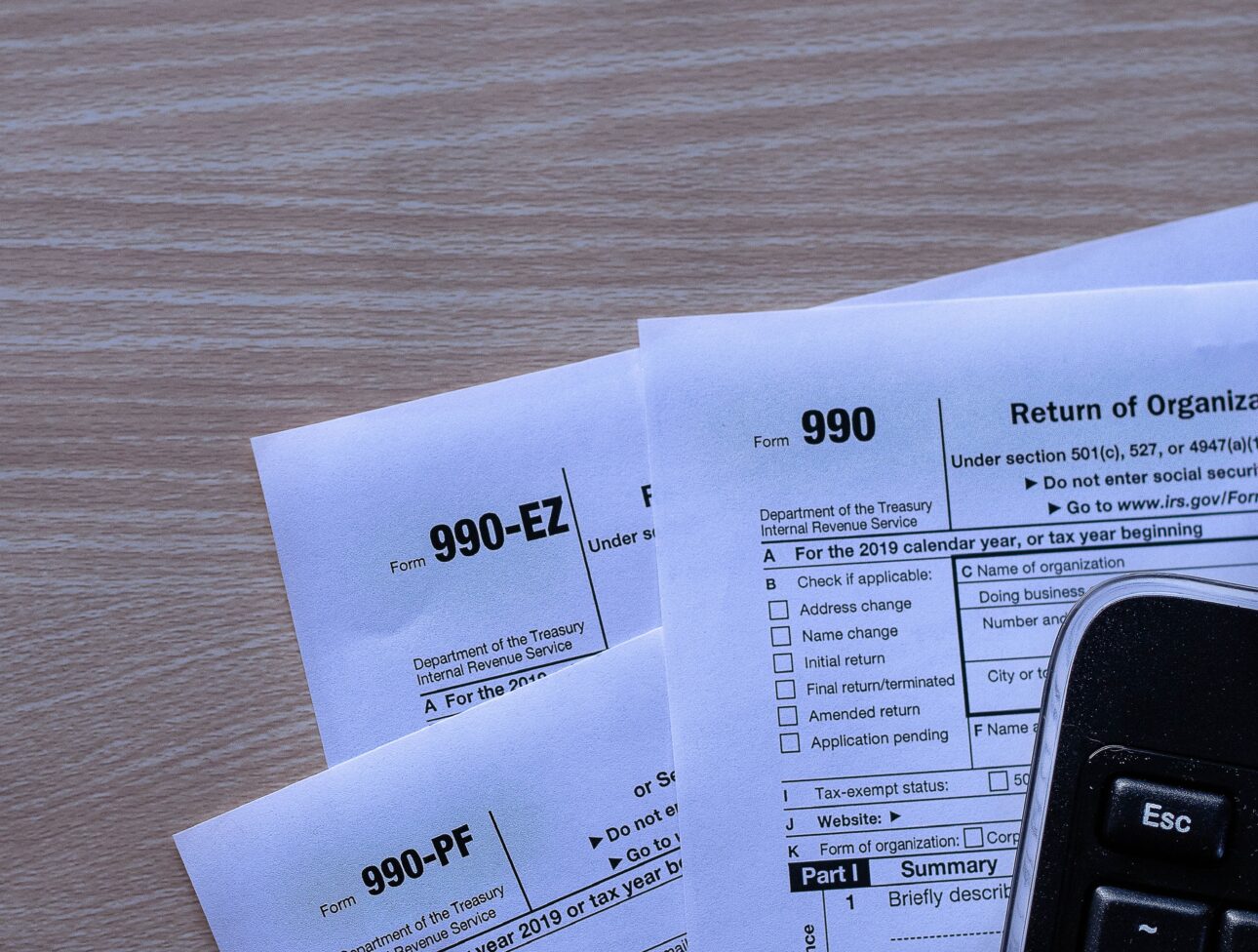
For those of you who have ever been involved with the preparation of a 990 Return of Organization Exempt from Income Tax form, you know it can be 50-plus pages of questions and boxes to check. Frankly, not that much fun for anyone except, perhaps, tax accountants.
First, let’s discuss what the 990 form isn’t: Although technically a tax return, it really doesn’t serve the purpose of the traditional tax return. The 990 is specifically for non-profit organizations that don’t pay taxes. So, why does it take 50-plus pages and hundreds of question boxes to complete this form? The answer is…it’s complicated.
What is the 990 tax return? The 990 is the tax form the Internal Revenue Service (IRS) requires all 501(c)(3) tax-exempt charitable and non-profit organizations to submit each year. In reality, it is a powerful marketing tool for not-for-profit organizations. The 990 gives the organization the ability to describe its overall mission and is an important document for perspective funders to review the organization’s operating efficiency and its financial results. Most 990 forms are uploaded to the GuideStar database, which presents information about every IRS-registered nonprofit organization.
The 990 is broken into several sections. Here are the four major components of the 990 tax return:
The 990 form includes the standard financial statement, balance sheet, profit and loss statement (P&L), and the schedule of functional expenses. The schedule of functional expenses will show the operating efficiency of every dollar spent with respect to administrative, development, and program expenses. Any potential funders will most likely want to understand this percentage. It shows, for every dollar contributed, how much goes into the actual program.
The 990 also includes a schedule of events, so if you host a gala, golf tournament, or bake sale, you must disclose the gross revenue expenses and the net results showing the operating efficiency of these events to any potential funders.
This schedule is designed to show, over the past five years, how much the organization has contributed as a percentage of total revenue. There are certain standards an organization must achieve to maintain its not-for-profit status. Again, this reveals the efficiency of the organization.
As part of the 990 filing, you must disclose funders who have made contributions over a certain dollar threshold-for example, $100,000, in the current year. It is important to understand that this schedule is only on the internal version of the 990, as it discloses your major funders. This information is not included on the version that is available for public viewing on GuideStar.
There are also a few key boxes that potential funders will look at. One box shows whether you have received 100% contributed support from your entire Board of Directors. Most funders will not support an agency that doesn’t have complete support from its board members. Another box verifies that you have provided a copy of the 990 from each board member for his or her review prior to your filing.
Done the right way, the 990 tax return can be an excellent marketing document for your organization to attract new funders. Be sure to review it annually and include any new programs or accomplishments.
Click here to find detailed instructions for the Form 990 Return.
If you are considering outsourcing your nonprofit’s accounting function, contact us to explore if we are the right fit for you.
In the meantime, check out our top 10 accounting tips for non-profits.
Discover how ARI is making a meaningful impact in the community, fostering positive change through dedicated initiatives and community-centric efforts.
The IRS Form 990 is an annual filing requirement for 501(c)(3) nonprofits, but it’s more than just a tax form- it’s a public-facing document that showcases your mission, efficiency, and financial health. Potential funders review 990s on platforms like GuideStar to evaluate how effectively your organization uses donations, the results of fundraising events, and the level of board support. Key sections include financials, event schedules, the public support test, and disclosure of major contributions. When done right, the 990 becomes a powerful marketing tool to build donor trust and attract new funding.
The 990 is an annual IRS report required of 501(c)(3) nonprofits. Its purpose is to provide financial transparency about the organization’s activities, efficiency, revenues and expenses; and to inform potential funders and the public about its mission, operating efficiency, and financial health.
Unlike a traditional tax return, the 990 isn’t about calculating income tax. Instead, it’s much more extensive in disclosures: it requires the organization to report detailed financial statements (balance sheet, P&L, functional expenses), schedules of fundraising/events, public support source, and check on governance like board support.
Funders tend to examine how efficiently every dollar is spent (program vs. administrative vs. development expenses), how fundraising or events perform (gross vs. net income/expenses), whether the nonprofits meet public support tests over past years, major contributors (vis Schedule B internally), and whether the board of directors is fully involves & financially supportive.
Board support is shown explicitly (e.g. whether 100% of board members contribute, whether board members have reviewed the 990 before filing). This is highlighted because funders often won’t back organizations where the board does not actively support or is not financially invested. Visible board support signals commitment, accountability, and oversight, which increases donor trust.
Nonprofits can leverage the 990 by treating it not just as a compliance document but as a way to show accomplishments, highlight operating efficiency, financial transparency, and accountability. By including successes, new programs, efficient use of funds, and strong board support, organizations can use the 990 to demonstrate credibility and attract new funders.